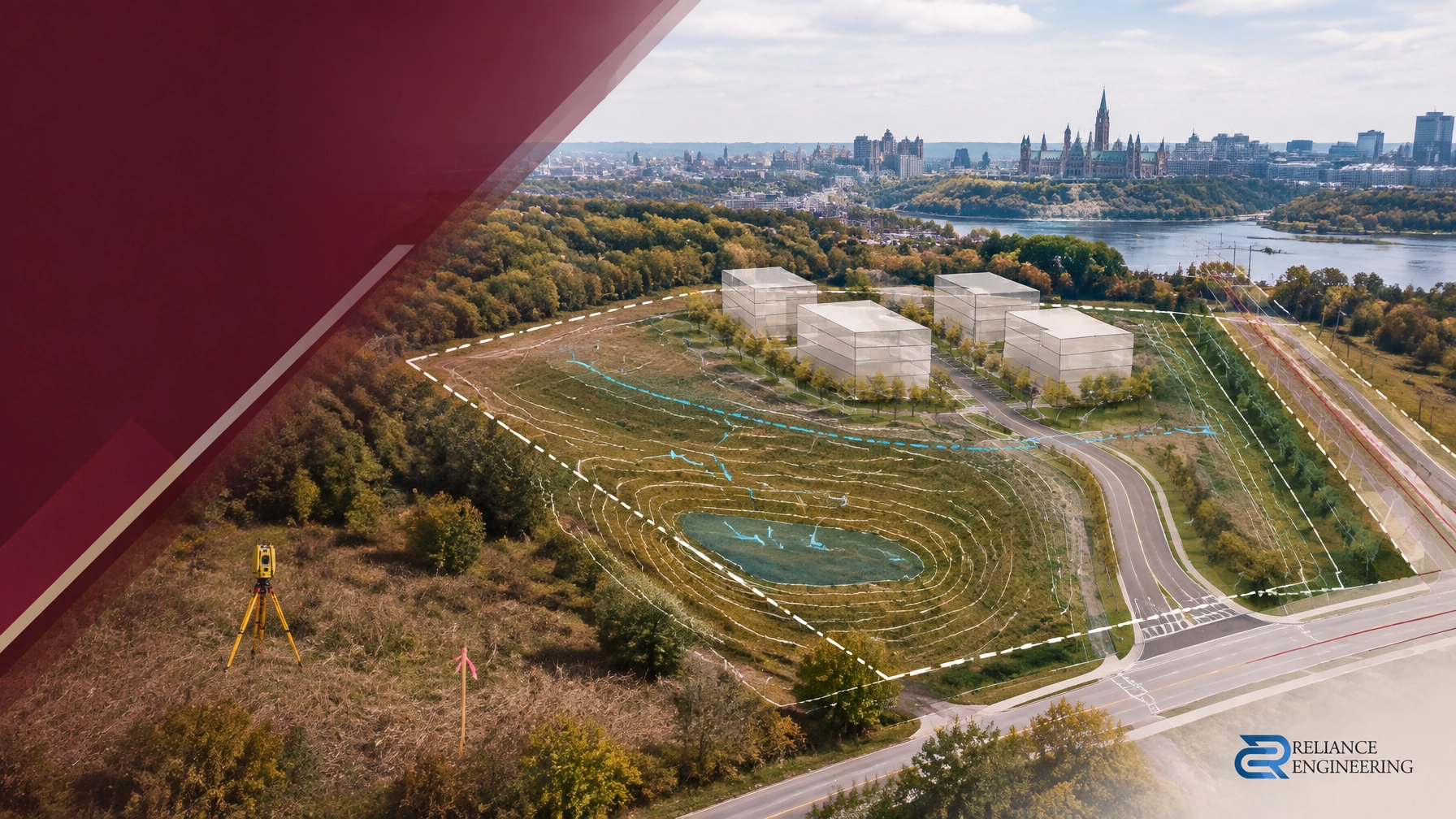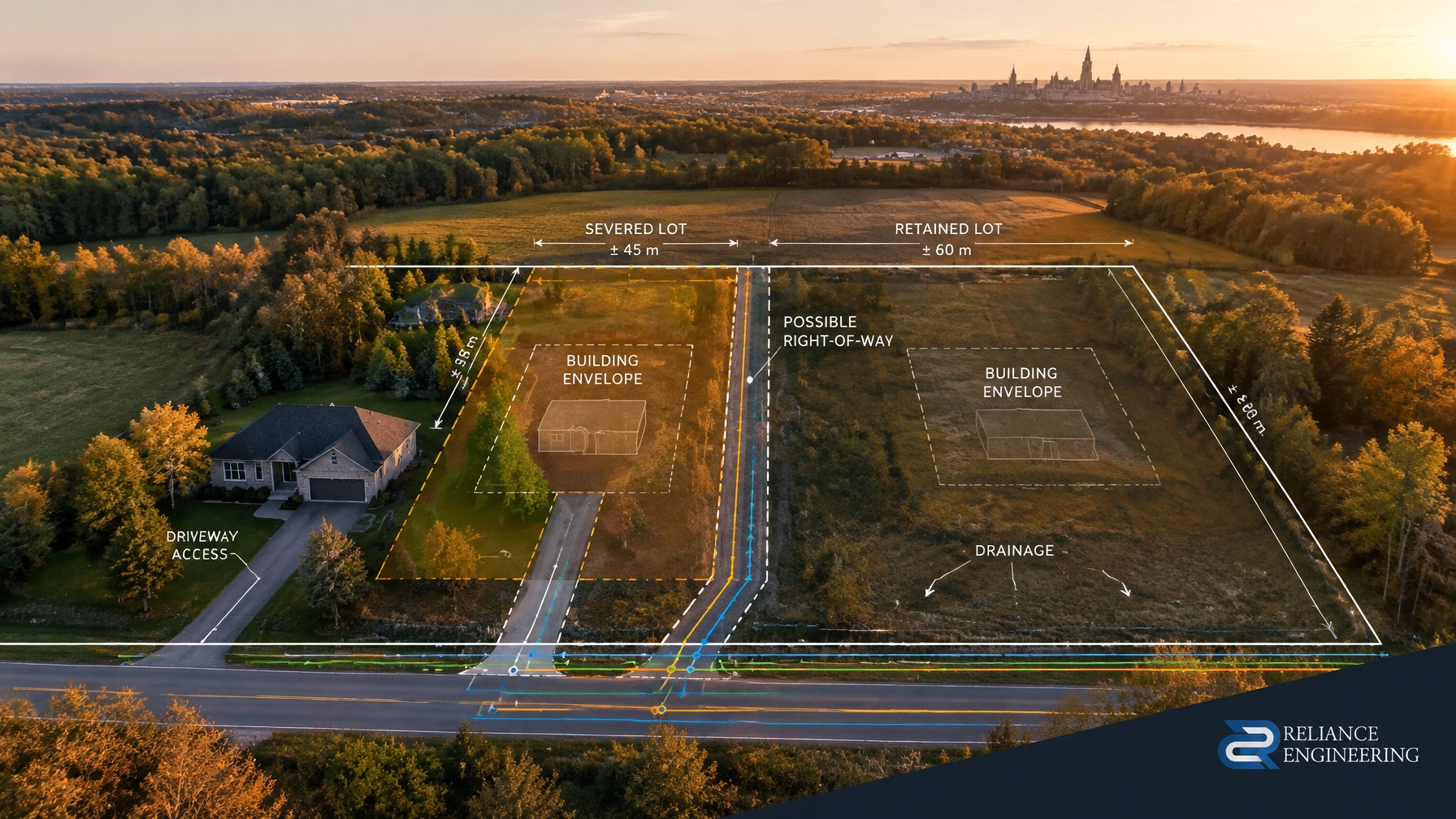
Ontario is undergoing a housing revolution. With the push for the "Missing Middle" and legislative shifts like Bill 23, property owners are moving fast to convert single-family lots into multiplexes, triplexes, fourplexes, and garden suites.
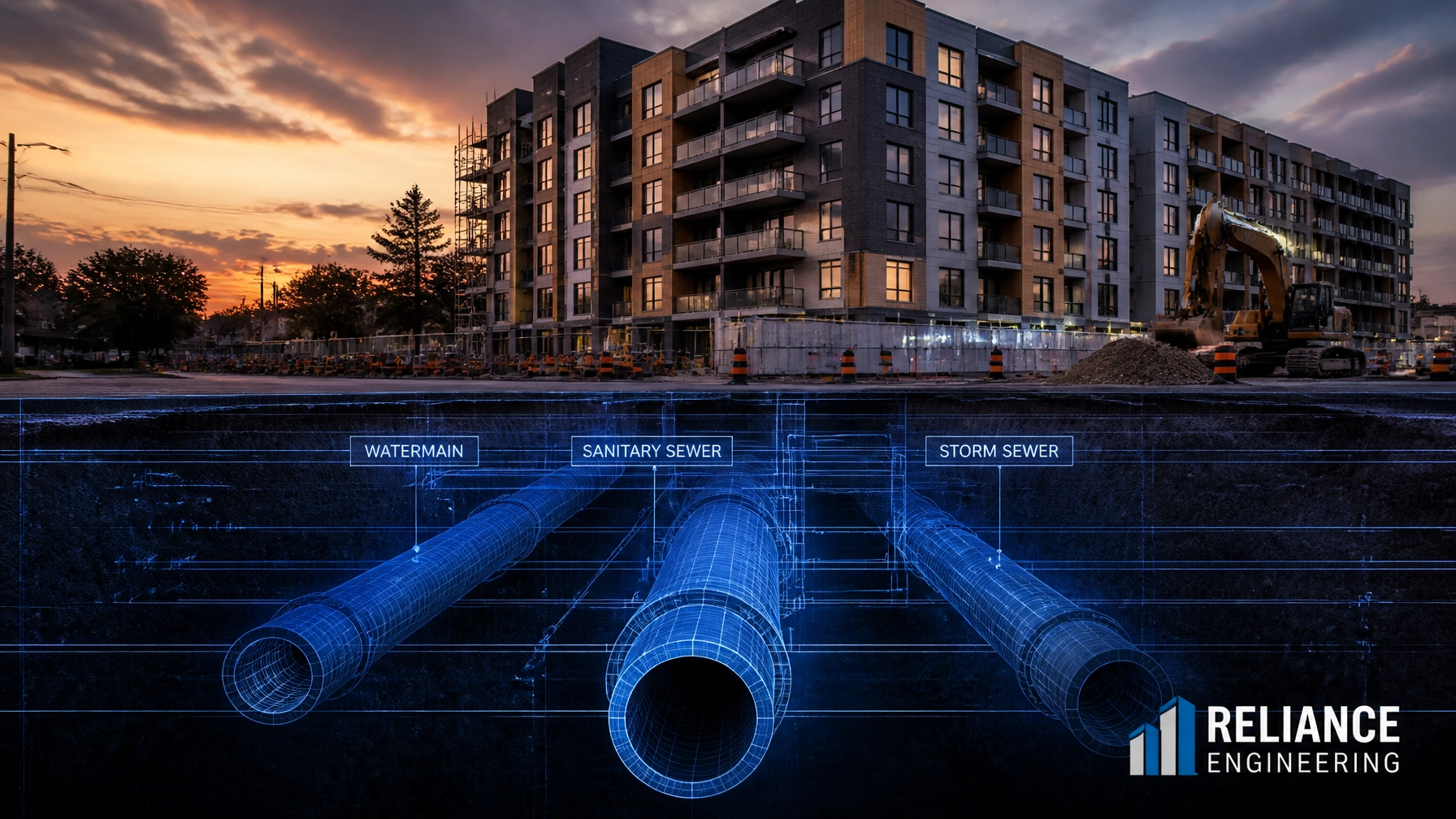
But here is the reality: your zoning might say "yes," but the pipes underground might say "no."
At Reliance Engineering, we see it constantly. A developer secures financing and architectural plans, only to be halted at the Site Plan Approval stage because the existing municipal infrastructure can't handle the increased demand.
Underground capacity is the ultimate gating factor. If you don't account for it early, your multiplex project is dead in the water.
The Hidden Logic of Infrastructure Capacity
Most developers focus on what’s above ground. In Ontario, municipal engineers focus on what’s below it. When you transition from a single-family home to a four-unit multiplex, you aren't just adding walls; you are quadrupling the demand for water and the output of sewage.
Municipalities across Ontario: from Toronto to Mississauga and beyond: are protective of their infrastructure. They will not allow a new connection if it threatens to surcharge the system or drop water pressure for the rest of the block.

1. Sanitary Sewer Capacity: The Hardest Limit
Sanitary capacity is often the biggest hurdle. Municipalities use specific "people-per-unit" formulas to calculate peak flows. If your local sewer main is already near its limit, adding three more units could push it over.
- The Risk: Without a proper Functional Servicing Report (FSR), you won't know if the downstream system can take the load.
- The Solution: We calculate the peak sanitary flow, including infiltration and inflow allowances, to prove to the city that your project is viable.
2. Water Servicing and Fire Flow
It’s not just about the sink and the shower. A multiplex often triggers new requirements for fire protection.
- The Pressure Test: Can the street watermain provide enough flow for both domestic use and fire suppression simultaneously?
- The Connection: Existing 1/2-inch or 3/4-inch services usually won't cut it. You’ll likely need a new, larger water service (often 1-inch to 2-inch for small multiplexes) to meet modern Ontario Building Code standards.
3. Stormwater Management (SWM): The Post-Development Problem
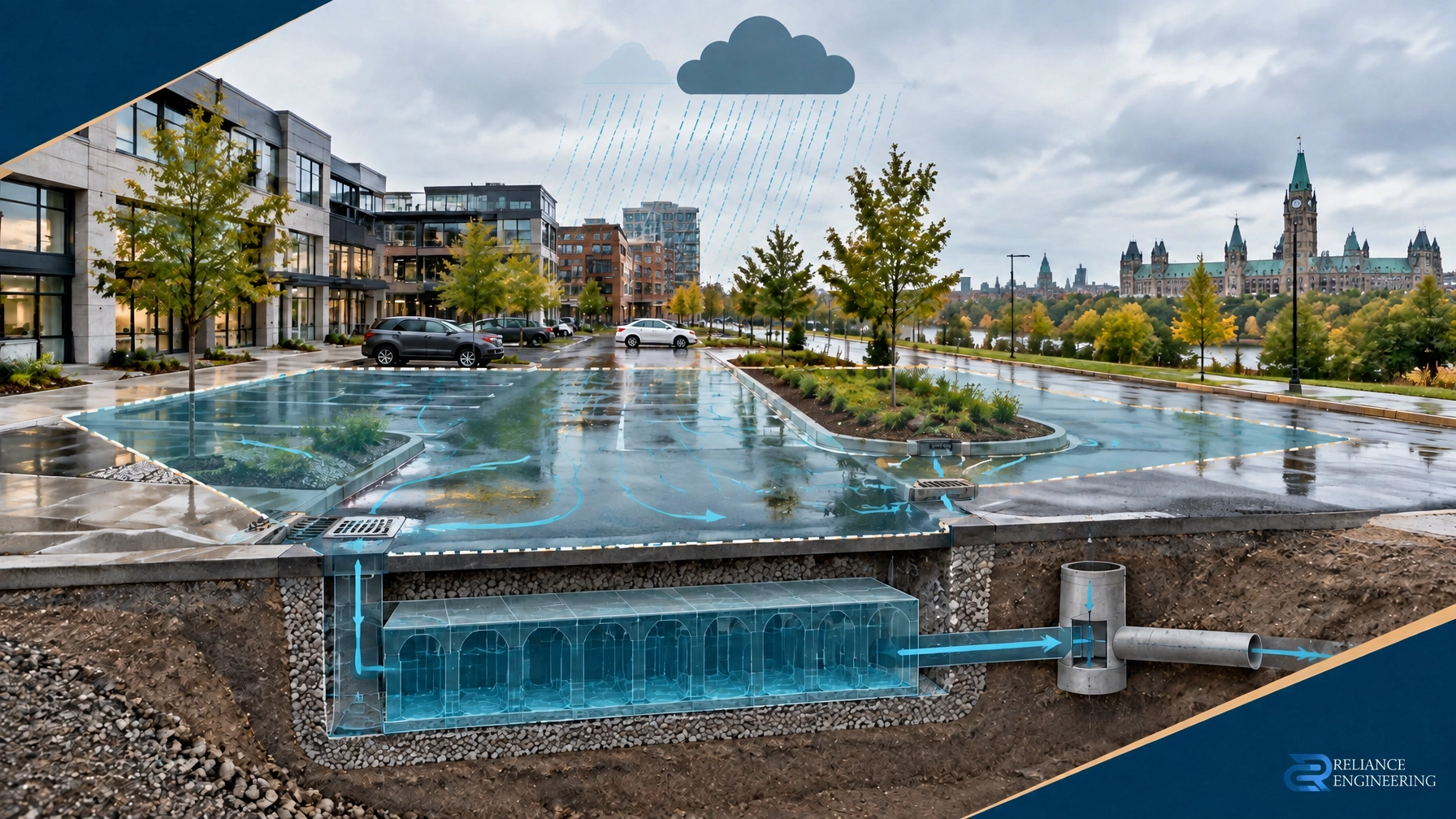
When you build a multiplex, you often increase the "impermeable" surface area (more roof, more driveway, less grass). Rainwater that used to soak into the ground now rushes into the city’s storm sewers.
- The Rule: Most Ontario municipalities require that post-development runoff does not exceed pre-development levels.
- The Tech: You may need on-site detention tanks, soakaway pits, or permeable pavers to slow that water down. This must be detailed in a Stormwater Management Report.
Why You Need a Functional Servicing Report (FSR) Immediately
Many developers wait until they apply for a building permit to think about pipes. This is a massive mistake. In most of Ontario, the capacity check happens during the planning or severance stage.
A Functional Servicing Report is the document that proves your project works. It is a comprehensive infrastructure analysis that includes:
- Existing Context: Mapping out the size and depth of municipal mains.
- Demand Calculations: Exact numbers on water consumption and sewage generation.
- Capacity Confirmation: Statements from the city or hydraulic modeling showing the pipes can handle it.

At Reliance Engineering, we don’t just draw lines on a map. We negotiate with municipal engineering departments. We know the local requirements across Ontario, and we ensure your Site Servicing Plan is airtight before it hits a reviewer’s desk.
Navigating Rejections: Don't Let Your Project Stall
A rejection at the servicing stage can cost months and thousands of dollars. Typical reasons for rejection include:
- Inadequate Fire Flow: Failing to prove the city can provide enough water for fire safety.
- Pipe Sizing Errors: Using outdated standards for the lateral connections.
- Lack of SWM Detail: Not accounting for where the water goes during a 100-year storm.
We take full ownership of our clients' needs. With over 20 years of principal experience, Naresh Ochani and the team at Reliance Engineering specialize in getting designs approved in one submission. We understand the precision required to secure permits quickly in the competitive Ontario market.

Conclusion: Build on Solid Ground (and Solid Pipes)
The "Missing Middle" is a golden opportunity for investors and homeowners in Ontario. But a multiplex is only as good as the infrastructure supporting it. Don't leave your servicing to chance.
Secure your project’s future with expert engineering. We provide the Site Servicing Plans, Grading Plans, and SWM Reports you need to get your permit and get building.
Contact Information
For professional civil engineering services and expert guidance on your next development project across Ontario, contact us today.
Reliance Engineering
Naresh Ochani, P.Eng. M.Eng.
Address: 6850 Millcreek Dr, Mississauga, ON L5N 2H4
Phone: 647-385-6418
Email: [email protected]
Website: www.relianceengineering.ca
Office Hours:
- Saturday: 12:00 PM – 2:00 PM
- Sunday: Closed