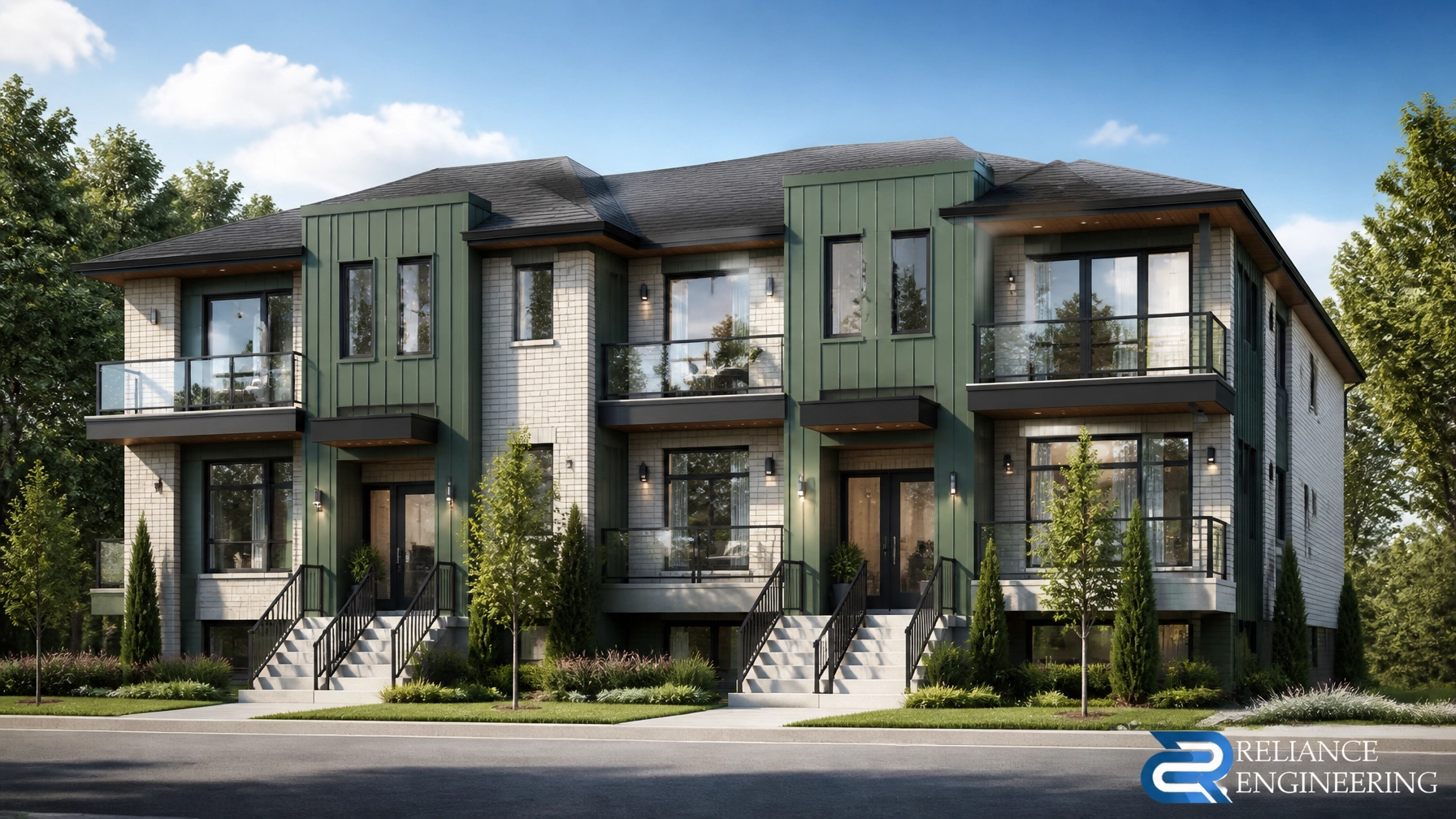
Ontario’s housing market is undergoing its most radical transformation in decades. For investors and developers, the "Missing Middle": the gap between single-family homes and high-rise apartments: is where the highest returns are hiding.
With the introduction of Bill 23 (More Homes Built Faster Act) and updated municipal bylaws across Ontario, the path to converting a single-family dwelling into a 3 or 4-unit powerhouse has never been more accessible. However, "accessible" does not mean "easy." Without the right engineering roadmap, your high-ROI dream can quickly become a permitting nightmare.
In this guide, Reliance Engineering breaks down the technical, financial, and regulatory requirements you need to dominate the multi-unit conversion space.
1. The Legislative Landscape: Bill 23 and Beyond
The province has laid the groundwork. Under Bill 23, most residential lots in Ontario "settlement areas" serviced by municipal water and sewers are now permitted to have up to three units as-of-right. This means you don’t need a zoning amendment to add a basement suite and a garden suite to a standard home.
The 4-Plex Opportunity:
While 3 units are the provincial floor, major hubs like Toronto and Mississauga have pushed further, allowing 4-plexes as-of-right in many residential zones.
The Catch:
"As-of-right" does not mean "exempt from scrutiny." Moving from a single-family house to a 4-plex shifts the property's classification. You are no longer just a homeowner; you are an apartment building owner. This triggers complex requirements for building permits, Ontario Building Code (OBC) compliance, and, crucially, civil engineering reports.
2. The Engineering Barrier: Why You Need More Than a Floor Plan

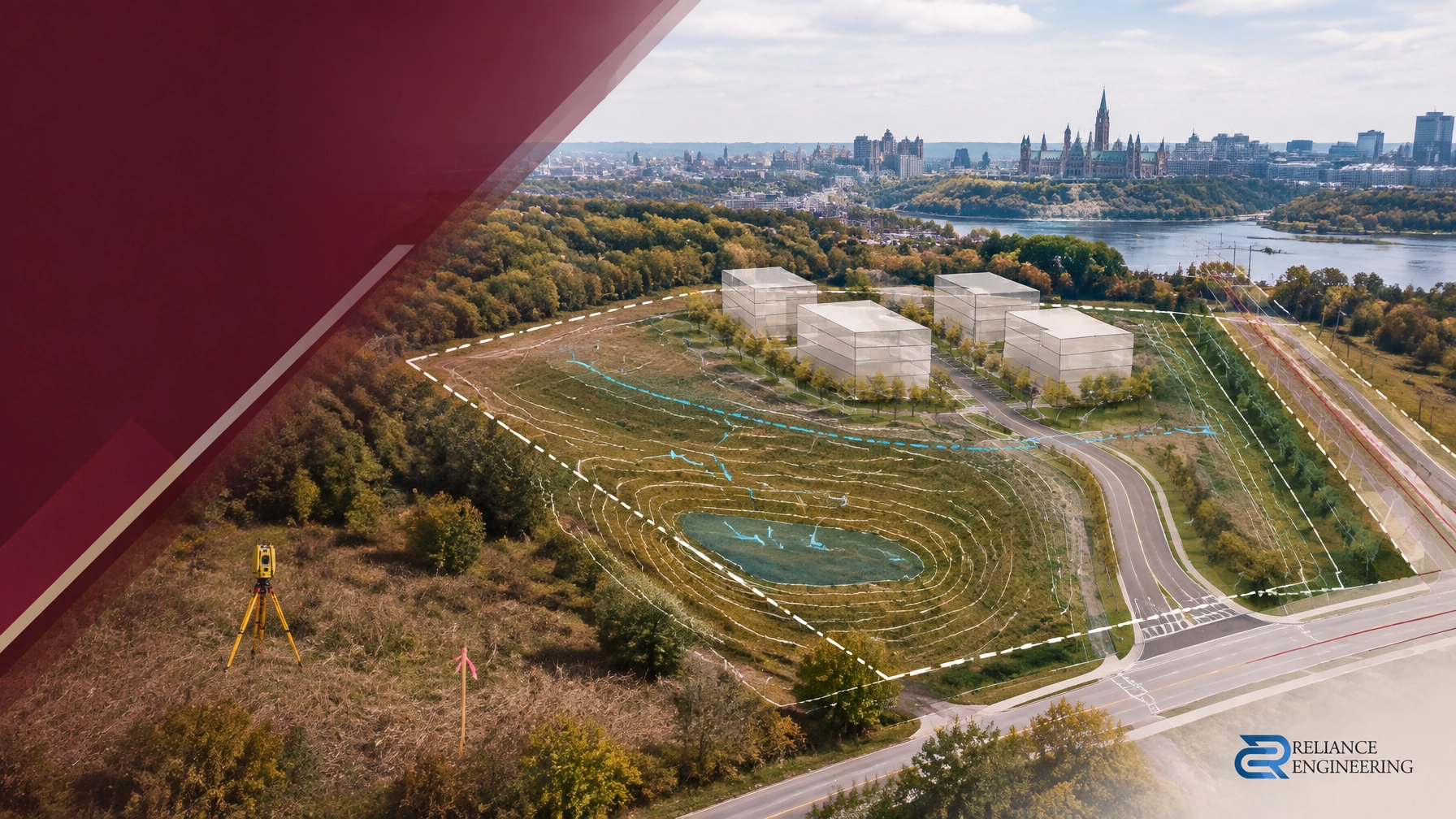
Most investors focus on the interior layout. But at Reliance Engineering, we know that what happens underground and on the surface determines your project's success.
When you increase density, you increase the load on municipal infrastructure. To get your permit approved, you must prove your site can handle the change.
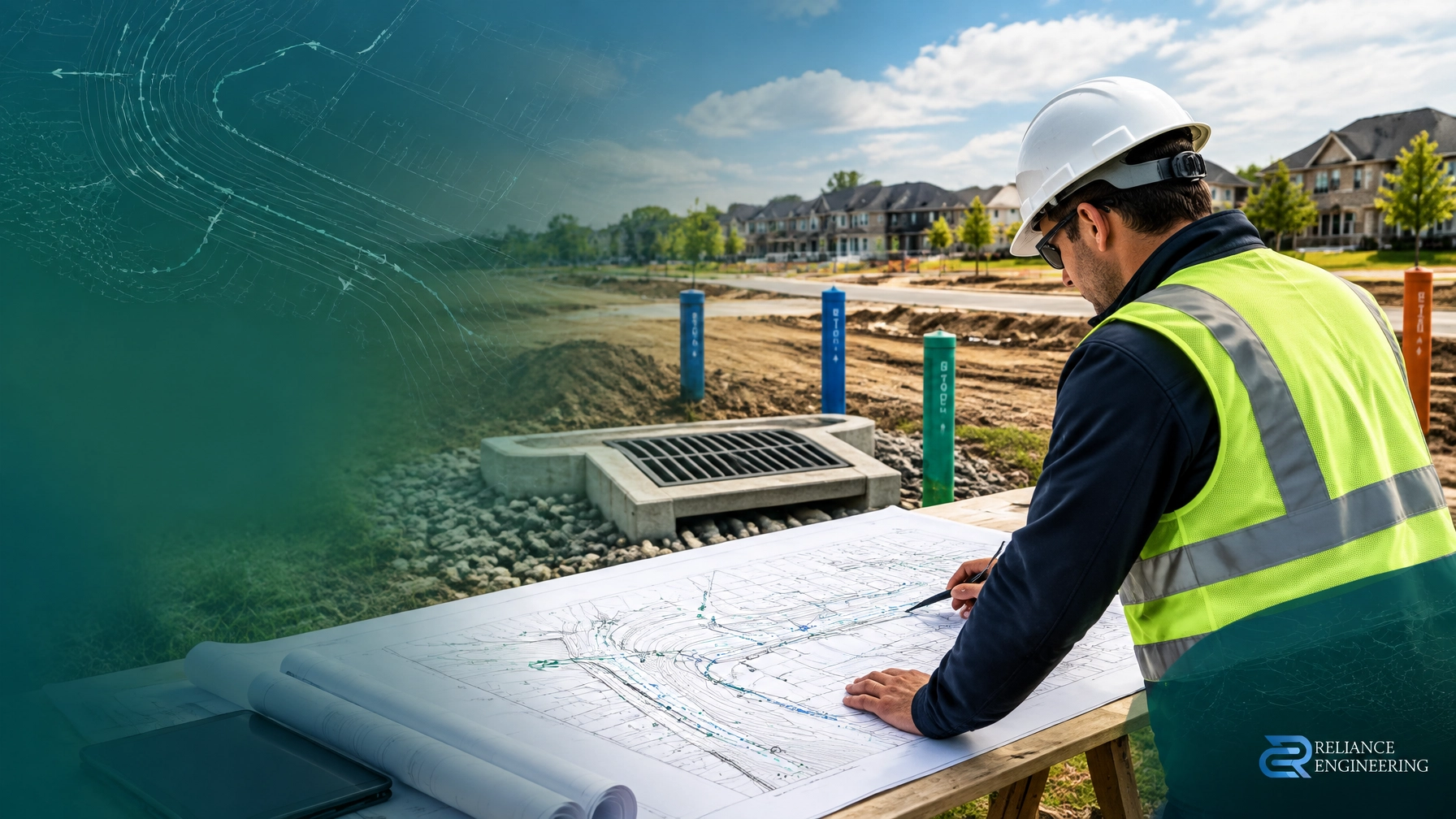
Functional Servicing Reports (FSR)
An FSR is non-negotiable for most 4-plex conversions. It analyzes whether the existing municipal watermains and sanitary sewers can support four kitchens and four bathrooms. We often find that standard 3/4" water lines are insufficient for multi-unit fire flow requirements, necessitating an upsized connection.
Site Grading and Drainage Plans
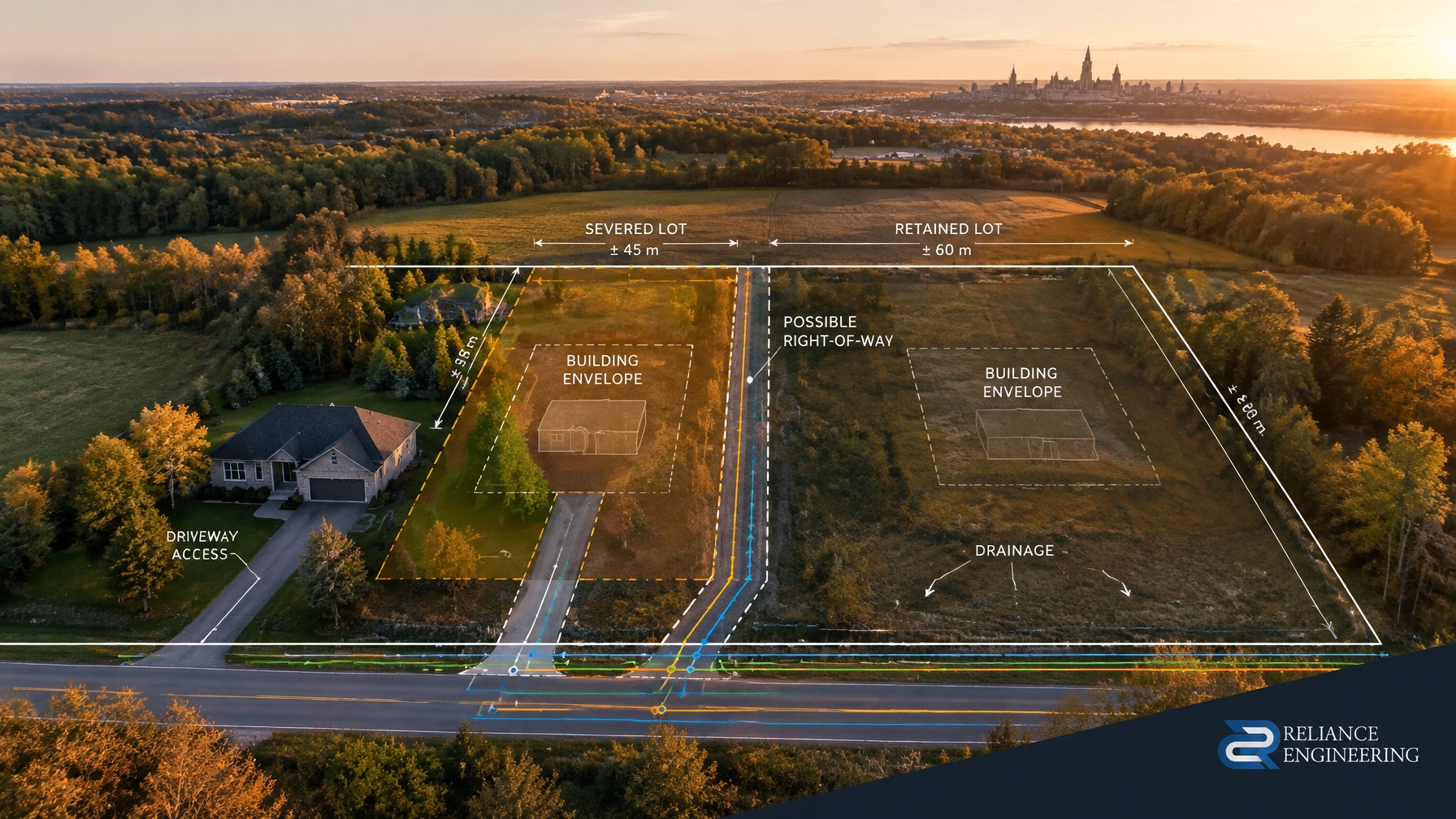
Ontario drainage law is strict: you cannot alter your land in a way that negatively impacts your neighbor. Adding units often means adding "hard surfaces" (pavement or larger building footprints). A Site Grading Plan ensures water flows away from your foundation and into the right municipal systems without causing local flooding.
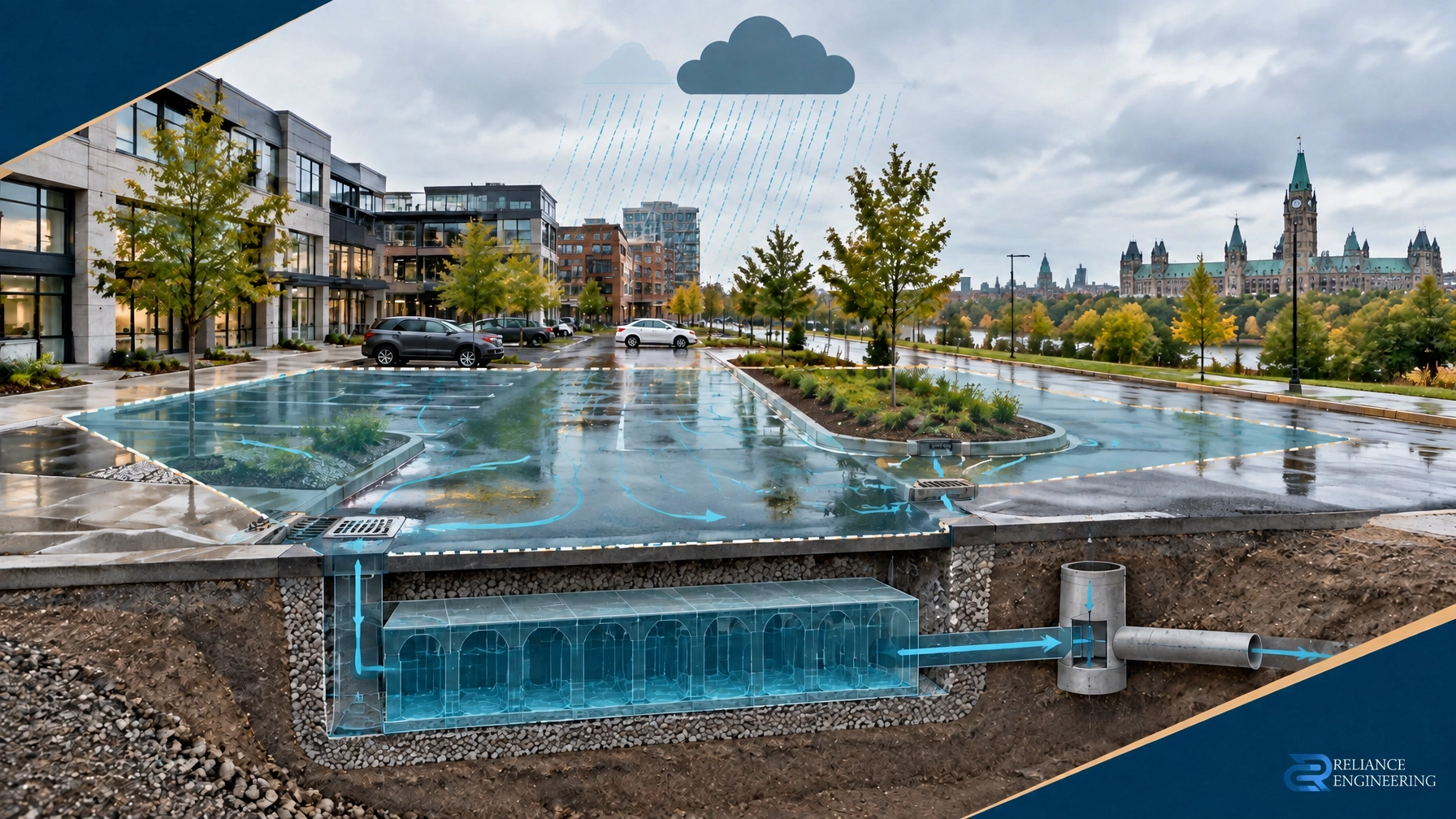
Stormwater Management (SWM)
Municipalities now require Stormwater Management Reports for multi-unit projects. We design Low Impact Development (LID) solutions: like dry wells or permeable pavers: to manage runoff on-site, keeping you compliant with environmental regulations and reducing municipal site plan approval friction.
3. The 4-Plex Math: Analyzing Your ROI

Success in the missing middle is a numbers game. Here is how the pro-forma typically breaks down for a house-to-4-plex conversion in the current Ontario market.
Estimated Cost Benchmarks
- Basement Suite Conversion: $100,000 – $180,000
- Above-Grade Addition/Reconfiguration: $150,000 – $250,000 per unit
- Soft Costs (Engineering, Permits, Legals): $30,000 – $60,000+
Revenue Projections (Average Ontario Urban Centers)
- 1-Bedroom Unit: $1,800 – $2,300/month
- 2-Bedroom Unit: $2,400 – $3,000/month
The ROI Perspective:
A property generating $3,500/month as a single rental can often jump to $9,000+/month as a 4-plex. Even with a $500,000 conversion budget, the equity lift (After Repair Value) and the cash-on-cash return often outperform any other asset class in the GTA and across Ontario.
4. 5 Strategic Tips for Multi-Unit Success
- Prioritize Serviced Lots: Ensure your property is on municipal water and sewer. Conversions on septic systems are significantly more expensive and technically difficult.
- Minimize Hardscapes: Excessive paving for parking increases your stormwater management costs. Design smart, not big.
- Check Fire Flow Early: Don't wait until the building permit stage to realize you need a $20,000 watermain upgrade. Get a preliminary servicing review during your due diligence.
- Optimize the Envelope: Focus on "internal" density first. Building up or out triggers more complex grading and structural requirements than reconfiguring the existing footprint.
- Hire for Speed: Municipalities are backlogged. A precise, professional submission from a PEO-authorized firm like Reliance Engineering can get you approved in one submission, saving months of carrying costs.
5. Fast-Track Your Approval with Reliance Engineering

At Reliance Engineering, we don't just draw plans; we secure approvals. With over 20 years of experience, we understand the specific municipal requirements across Ontario. We take full ownership of your project, guiding you through the maze of Functional Servicing Reports, Site Plan Approvals, and Building Permits.
Our designs are precise. Our service is responsive. Our goal is your ROI.
Contact Information
Naresh Ochani, P.Eng. M.Eng.
Principal Engineer
Company: Reliance Engineering
Address: 6850 Millcreek Dr, Mississauga, ON L5N 2H4
Phone: 647-385-6418
Email: [email protected]
Website: www.relianceengineering.ca
Operational Hours:
Saturday: 12:00 PM – 2:00 PM
Sunday: Closed
Weekdays: By appointment
Professional Certification:
Authorized by the Association of Professional Engineers of Ontario (PEO)
Certificate of Authorization: 100548882